Agents Teaching Agents
A few months ago I built an agent at work. Called it DILO. It scales my team’s knowledge — captures patterns from our codebase, remembers what we’ve learned, feeds insights back into our work.
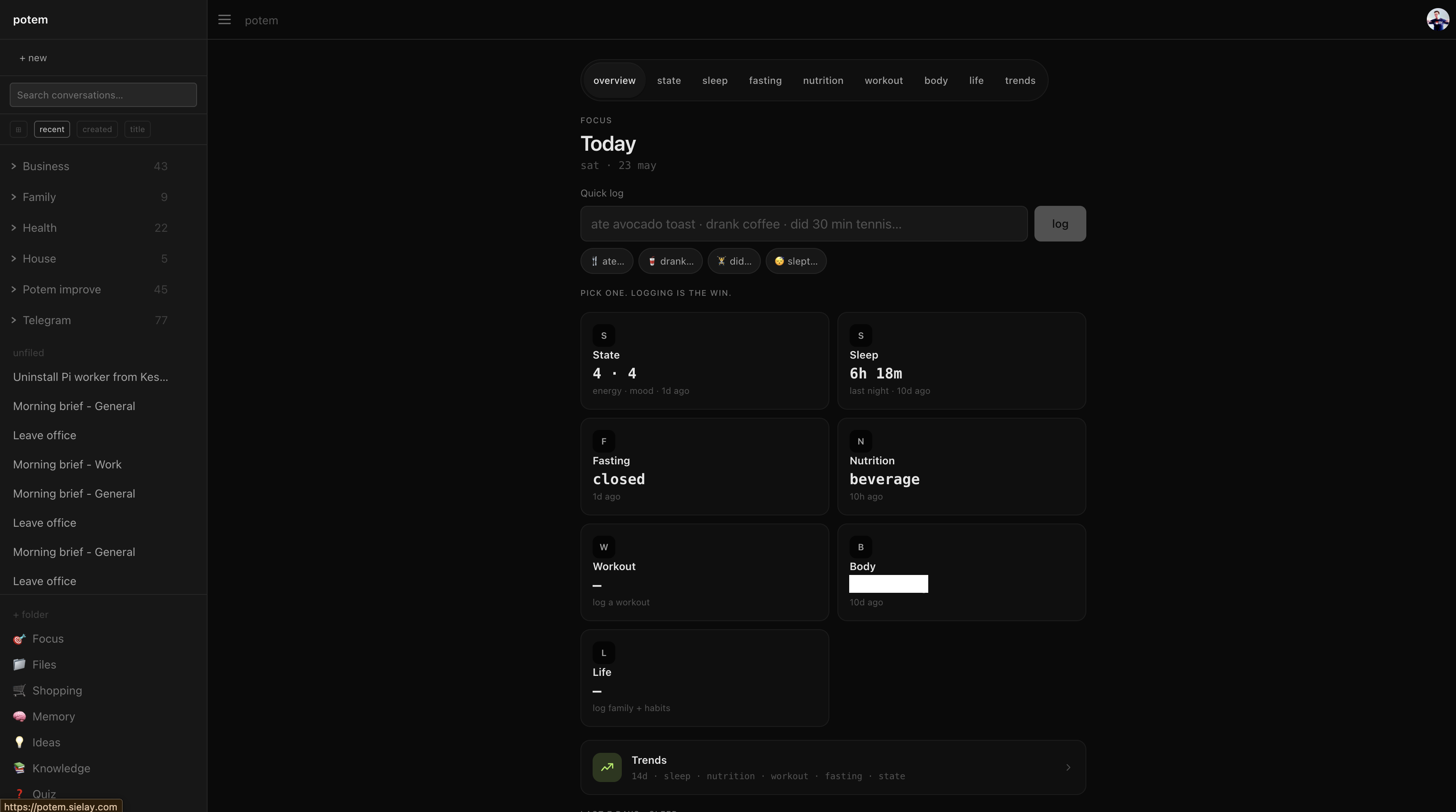
Then I built one at home. Called it Potem. It manages my AuDHD — tracks my energy, my spinning thoughts, my stress cycles. Reminds me what matters when my brain is drowning in ideas.
They never talked to each other. But they should have.
The feedback loop DILO taught me how to structure memory so it doesn’t rot. How to route information so it stays findable. How to build a system that gets better when you use it, instead of getting slower.
Potem taught me something different: memory is continuity. Not storage. Not a database. Continuity.
When you lose your memory — when the system forgets what you’ve been working on, what you’ve tried, what failed — you start from zero every time. You spin the same thoughts. You make the same mistakes. You burn out.
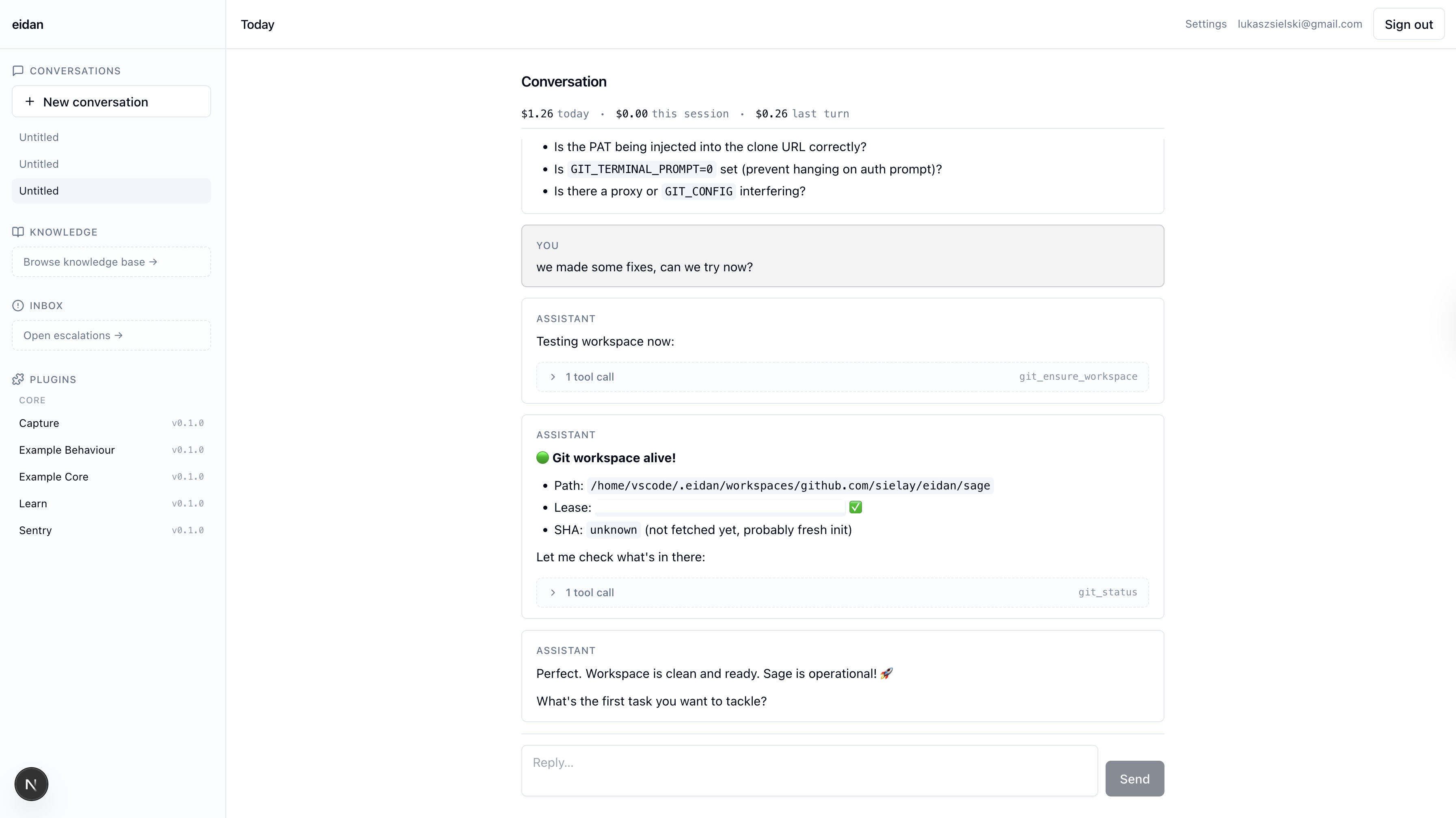
I took what DILO learned about routing and what Potem learned about continuity. Built Eidan.
Why this matters Most AI systems are stateless. They read your prompt, give you an answer, forget you existed. You’re the one holding the context. You’re the one remembering what you tried last week. You’re the one drowning.
SaaS platforms fix this by locking your memory in their database. You get continuity, but you lose ownership. Your data is theirs. Your patterns are theirs. If they change their pricing, their terms, their focus — you’re stuck.
Eidan is different. Your memory lives in your database. Your infrastructure. Your rules.
But it’s not just self-hosted storage. That’s boring and it doesn’t solve the real problem.
The real problem is routing.
Your memory is useless if you can’t find it. If your agent doesn’t know which memories matter for this moment. If you’re drowning in notes that don’t connect to anything.
DILO taught me: memory needs structure. Skill domains. Event types. Semantic routing. So when your agent needs to help you, it doesn’t drown you in everything you’ve ever written — it surfaces what’s relevant.
Potem taught me: that structure needs to be yours. Not a rigid schema someone designed for “general users”. Your brain works differently than mine. Your work is different. Your memory should reflect that.
The third agent Eidan is what happens when two agents teach each other.
It’s not a chatbot. It’s not a note-taking app. It’s not a CRM.
It’s infrastructure. A foundation for building agents that actually know you. That remember your constraints. That understand your patterns. That get better when you use them.
Core is open source (AGPL). You can run it on your server, on a Pi, on a laptop. You own it.
Plugins are paid bundles — Lifestyle (calendar, fitness, food), Coding (repos, PRs, incidents), Business (mail, deals, invoices). Each one is a private repo you get after checkout. You can fork it, modify it, deploy it yourself.
No lock-in. No surprise pricing. No “we’re pivoting and shutting down your data”.
Why now I’ve been building agents for a year. Both worked. Both taught me things. But they were separate experiments.
Eidan is the synthesis. The thing I wish existed when I started.
And I’m building it in the open because the problem isn’t technical anymore. It’s cultural.
Most builders are trapped in a choice: either build on SaaS (lose ownership) or build solo (lose feedback, lose community).
There’s a third way. Build on open infrastructure. Share the patterns. Let agents teach each other.
That’s Eidan.